Currently taking 5 clients in July

Schedule your breakthrough call
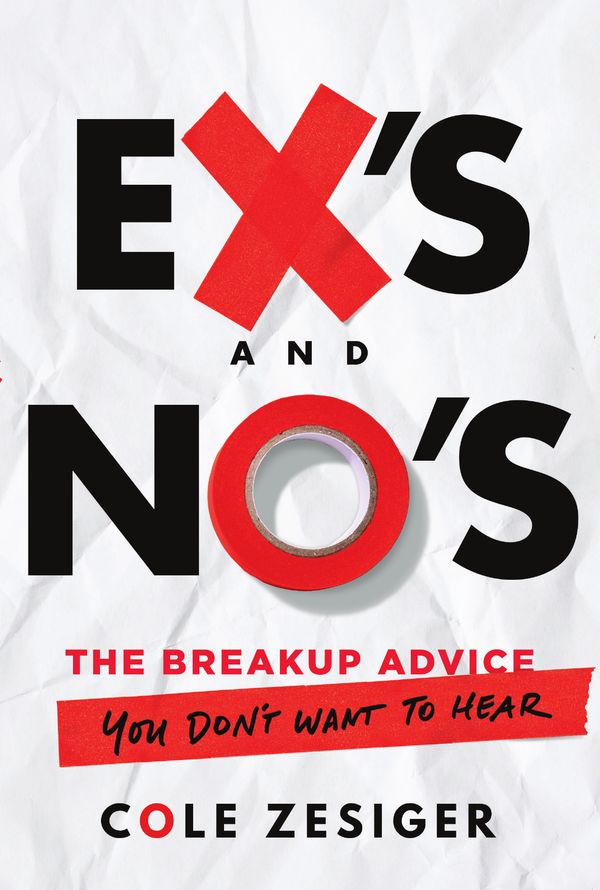
Ex's and No's by Cole Zesiger

Free preview

Ex's & No's

The breakup advice you don't want to hear.

Cole Zesiger

Praise for the book

From the people you'd want vouching for it.

"This has become my go-to resource for clients navigating heartbreak. Cole beautifully combines science, empathy, and actionable tools to help you heal, grow, and avoid the painful mistakes that keep so many stuck. It's not just about getting over your ex (or getting them back) — it's about coming back even better than before and stepping into your best self through the process."
— Morgan Starr-Riestis, LMHC, PATP Licensed Mental Health Counselor
"I was blown away by this book. I expected something good — but not something this well-researched, insightful, and genuinely funny. As a couples therapist with more than two decades of experience, I was struck by the depth of Cole's understanding of relationships."
— Tony Overbay, LMFT Host of The Virtual Couch
"Cole Zesiger is the coach you want in your corner after a breakup. He delivers his trademark no-nonsense advice — hard-hitting yet deeply comforting. Cole reminds you he's been there too. And like him, you can reclaim your life and come out even better on the other side."
— Julie Krafchick & Yue Xu Co-authors of How to Be Dateable; co-hosts of the Dateable podcast
"Cole has an amazing way of being pragmatic about heartbreak while still navigating the emotional complexities you may face. If you're lost in the process of a heartbreak, consider using this as a companion on your journey."
— Jaymen Chang Author; creator of @thebreakupjournalpdf
"Cole wrote the book I want to give my personal friends and family members when they go through heartbreak. It's so practical and incredibly useful."
— Trevor Hansen, LMFT @theartofhealingbytrevor on Instagram

Introduction

My Story and Why I Wrote a Book About Breakups

Why write a book about breakups?

I battled with this question for three years. What could I write that could truly help someone who is in so much pain? What could I write that would offer a sense of security to someone who feels like their entire world is crumbling around them? My answer came when I thought back to who I was in the Spring of 2022. That's who this book is for: the past version of me and anyone who feels the same. This story begins on a day I'll never forget.

I heard my wife crying downstairs. It was her first year as a school teacher, and she had just walked in after a long day of work. I was deep into studying for the MCAT or medical school admissions test, an eight hour exam that would largely determine our future. My first thought was that she had had a difficult day at school, so I closed my laptop and walked downstairs to ask her what was wrong. I found her sitting on our couch looking completely broken with tears streaming down her face. Her eyes were red and swollen, and it appeared as if she had been crying for most of her drive home. In response to my asking her what was wrong, she asked me if I would ever agree to moving closer to her family. This was a difficult topic for us which we frequently argued about. We had never come to an agreement and instead settled on a lose–lose compromise in which neither of us were to live near our families. Instead, we would live in the middle which felt fair as neither of us would get what we wanted. I answered her question as I had in the past. I would not agree to move. The next words out of her mouth were words I had never expected to hear:

"I want a divorce."

■ ■ ■

I didn't date much growing up. People liked me, but I couldn't see it because I didn't believe anyone really could.

After high school, I went on a two year religious mission in the Philippines and gained a lot of personal confidence. While there, my fellow missionaries and I spent close to twelve hours a day, seven days a week speaking to anyone who would listen to us about Jesus Christ. We were assigned a specific geographical area which we would walk day in and day out doing our best to share what we believed. These were two of the greatest years of my life, but they were also filled with a heaping portion of rejection. The resilience I gained served me well when I returned home. When you get told "no" more than one hundred times a day for a couple of years, asking someone on a date doesn't feel so scary. I returned to the United States in late 2017, and by then dating apps had caught fire. I was determined to find a girlfriend. Many of my friends were entering serious relationships, and I was afraid of being left behind, so I hopped on my first dating app and started swiping like a mad man.

Soon, I had matches, dates, and this quickly led to the accomplishment of my goal of getting a girlfriend. I fell completely in love and we were married relatively quickly. Three days before my 21st birthday, I had sealed the deal with who I thought would be my life partner. At this point, I thought I had figured out everything there was to know about life and love. As it turns out, I was wrong.

We loved each other, but our marriage quickly devolved into many big, blowout fights. Although I had gained some level of self-confidence, many of my self-esteem issues remained. Even though I thought I had things figured out, I was still very young and in many ways, I had no idea how to be a husband. I found myself nit-picking my wife about things that didn't really matter. I became critical and jealous. Additionally, we began to struggle to fit in with one another's families. These two major issues, along with many others, eventually led to our divorce after just two and a half years of marriage.

■ ■ ■

I couldn't believe it at first. Heading into my marriage, I never thought divorce was a possibility. I was the guy who had figured out life and love at 20! Much of my confidence in our marriage was founded on a belief that anything and everything could be worked through. In all honesty, at the time I naively believed that people who got divorced were quitters who gave up instead of working things out. Seeing the world through this lens, I didn't listen to her much that night. I didn't actually believe that it was possible for her to leave me. We fought and went to sleep.

The next morning she told me she was going for a drive and was gone for about eleven hours. I didn't move from the couch the entire day. After close to six hours my anxiety took over and I attempted to call her close to 30 times. She declined my calls again and again until I finally gave up. I am still not sure where she went, but when she returned, she was reinvigorated in her decision. The reality finally began to set in for me. We were not going to work it out this time. We were going to get a divorce.

I sat on the bathroom floor, sobbing. I felt completely broken and was doing everything I could to convince her to stay. Thinking back, I believe I would have been happy even if she stayed only out of pity. She came in and comforted me, but wouldn't budge on her decision. Our marriage was over. She packed an overnight bag, grabbed our dog, and stayed in a hotel.

That night, I finally called my parents to let them know what was happening. I hadn't said anything until that point because I felt that if they knew, it would be real. My dad suggested that I come and stay with them to give her the space she was asking for. As he made the three-hour drive to pick me up, I cleaned our house and took special care to leave sentimental things out for her to find, thinking that this might change her mind. I left a small book I had made her on the couch, my coat that she loved to wear on the counter, and the keys to my truck on the table. After texting her to let her know I was leaving, she thanked me, and I moved back in with my parents.

I spent the next few days scanning every bit of my memory for any sign of hope to cling to. By day three, I had built up enough hope that if I showed up with flowers and sincerely apologized, she would take me back. That night, my dad and I once again made the three-hour drive. He was my hype man for the entire trip, reminding me that I needed to be strong and confident, like the man I was when she fell in love with me! His advice felt so good and by the time we arrived, I felt prepared to win my wife back. I didn't knock. Instead, I walked straight in to find her on the couch watching TV, staring back at me with surprise and fear in her eyes. We had recently had pictures taken and hung on our walls. The now empty walls were the second thing I noticed. Third, I noticed that her ring finger was bare.

I laid out my entire case. She calmly and kindly listened. I made every promise that I would change. By the end of my speech, I felt fairly confident that she would change her mind. Her response crushed me. She stated that she had felt nothing but peace since she had made this decision. Without hesitation, she reaffirmed that she was not going to change her mind. Our conversation lasted a little under 45 minutes. Before I left, she assured me I was special and that I would find someone who would love me and be good for me, but it was not going to be her. I awkwardly waved goodbye and walked out. My dad and I drove home feeling defeated. This was the last interaction where things between us felt remotely normal. Going forward, we felt like strangers.

The next week was a blur. I read through our old text messages hundreds of times looking for answers or for something I had missed. I felt that somewhere, buried in one of our old conversations was the key to understand what was happening and bring my wife back. I talked through what happened with my parents, siblings, friends, and anyone else who would listen to me any chance I could get. I also began going to therapy and this made a major difference for me; I began to feel like I was treading the water of my emotions rather than drowning in them.

At the end of that week, I received a message requesting that I come get my things. After completing the long drive, I attempted to walk in like I had every day that we had lived there, but the door was locked and my key would not open it. I was surprised to see her mom answer the door. She had flown in and moved into our home to be with her daughter. She had an air of professionalism, but smiled and greeted me like she normally would. Behind her lay a stack of about 20 brown moving boxes that were already sealed shut. My ex-wife sat on the couch at the far end of the room. She had on a new outfit that I had never seen before, a haircut and eyes that seemed to be full of anger toward me. With each box I grabbed, her mom would slide a new one forward so I would have no need to enter our home. When I turned to grab the last box, I heard the door slam shut and saw it was on the porch. I was not going to let it end this way, I thought. I deserved the chance to at least say goodbye to my wife and dog. I also wasn't sure if I had all of my things since all of the boxes were sealed. Without knocking, I opened the door and started up the stairs. Their professionalism instantly dropped and shifted to rage as my wife and her mom threatened that if I did not leave they would call the police. I continued up the stairs to find that every trace of me had been completely erased. My office was now a makeup studio. My closet was now filled with dresses. All of our pictures were gone, and I felt like a ghost in my own home. After seeing this, I broke down again and asked my wife how she could do all of this. Her eyes welled up with tears and for a moment, her coldness faded and I could see my wife again. She replied with words that haunted me for years.

"I would have had a happy life if you weren't such a jerk."

I walked out the door, waved goodbye, and that was the last time I ever saw her.

What I did next was completely unhealthy, and my actions illustrate a major change in character that had to take place for me to become ready for a healthy relationship. We will dive into that change later in this book. I was terrified to get back into the dating world, but at the same time, I didn't know what else I could do. I didn't know how to live life as a single adult. I had always had someone and I was terrified to think about what my life would look like alone. I foolishly thought: "I just need to find someone else who can take her place, get another dog, and get back to my perfect life like this never happened."

That, of course, was not possible. I was a person with feelings. I had a real connection and experienced a great loss that needed to be grieved, but I didn't know where to start. So, after only three days of being separated from my wife, I started swiping again on a dating app. I did feel guilty about it, but I excused myself, thinking that I needed reassurance that people still thought I was attractive to receive a much-needed boost to my confidence. The truth is, I was aching to find somebody to save me from feeling alone. At the end of the first day, I had some matches and some conversations. After just over one month, I began dating someone new, and for months, this relationship drove the pain away. I thought I had completely moved on from my divorce. I was, once again, wrong.

My second relationship seemed beautiful. We went on several adventures together and she became close to my family. I opened up to her about many of my fears and our connection became strong. About 10 months into our relationship, we began to discuss the future and what a potential marriage could look like. This discussion caused something to flip in my brain and I became distant. I felt dizzying anxiety any time I would think about tying myself down again. I began to find flaws everywhere in our relationship and with her. I remember looking out the window once while we were driving and seeing a couple happily walking hand in hand on the sidewalk. My first thought was that I didn't know if I could ever feel how they seemed to feel. Eventually, I recognized that I could never be happy in the relationship, but at the same time, I was terrified to leave and be alone again. My anxiety and distancing behaviors eventually became so all-encompassing that she broke up with me as well. All at once, the feelings of crushing anxiety came rushing back. It was as if all of the pain from my divorce had been locked away behind a dam, and this second breakup had caused it to burst.

Once again unwilling to face the pain, I googled "How can I get my ex back?" I had to fix my life and getting my girlfriend back felt like the only solution to my problems. I had lost my wife and there was no way I was going to lose her, too. I found a couple of content creators that resonated with me on YouTube and watched their videos religiously, consuming about 4–5 hours of "ex back" content every day. It was all I did with my free time. These videos offered a sense of peace because watching them felt like I was making some sort of progress in my effort to save our relationship. I replayed every moment of the breakup in my mind, searching for answers and trying to match them up with the signs I was learning about in the videos.

Eventually, I watched one video that changed my life. It wasn't necessarily the main message of the clip, but this line seemed to speak to me directly:

"If you want her back, you need to become her best option."

For some reason, this line momentarily snapped me out of "I need her back right now!" mode and prodded me to examine my own life. As mentioned earlier, after my divorce, I moved back in with my parents. Since I'd had a girlfriend, I hadn't made an effort to make any new friends. My career was also on pause. I was waiting to get into medical school and I wasn't sure if I was going to get accepted or if I would have to apply again the next year. In summary, my entire life was in a state of limbo, and the one place I found meaning, my relationship, was out of my control. It felt like every piece of my happiness was on pause until she came back into my life.

What I did next will be the subject of this book. I can now confidently say that I am in the happiest, most fulfilling relationship of my life. I am a father to a beautiful daughter who reminds me that every day is a blessing. I have a supportive circle of friends and I get to help people avoid the pain I went through as a breakup and divorce coach full-time. I am living a reality that post-divorce and post-breakup me would not have dreamt possible.

My goal is to help you get to a similar place by the end of this book and be able to say with perfect honesty:

"I am grateful for my breakup. It was a turning point in my life, and helped me become someone I am proud of today. I have turned intense heartbreak into a joyful life and I wouldn't change a thing."

Chapter 1

Why Your Brain Thinks Love
Is Life-or-Death

"Grief is the price we pay for love." — Queen Elizabeth II

For many people, the pain of a breakup feels physical, so much so that researchers at the University of California have proven that the use of Ibuprofen can blunt distress experienced by women as a result of heartbreak. Interestingly, the same study found that for men, Ibuprofen had the opposite effect, making the pain of the breakup worse. My heartbreak left me with a feeling of intense pressure inside my head, to the point where I felt like I was about to explode. My mind would race in circles trying to pinpoint every explanation for how my relationship had ended. It almost felt like if I could solve the problem logically, then I would be able get her back.

Over the past couple of years, I have spoken to over fifteen hundred people about their breakups. Most of these conversations took place in sixty-minute one-on-one video calls. These people called from countries and cultures all around the world ranging from Colombia, to India, to Ireland, to the United States. I've spoken to nearly equal amounts of men and women, in heterosexual, homosexual, polyamorous, and monogamous relationships. Across my calls, I have noticed several patterns that are usually hidden from view. As for why breakups cause so much pain, these two explanations seem most consistent with what I have observed:

1. Evolutionary Biology

Brian Hare, a professor of evolutionary anthropology at Duke University, has conducted extensive research on the evolution of cognition in humans and animals and has proposed what he calls the "Self-Domestication Hypothesis." This claim states that natural selection favored early humans who displayed greater aptitude for social interactions and cooperation. Before we lived in towns and cities, humans were hunters and gatherers. We lived in tribes and each tribe member had a role. Some would forage for food, some would take care of the camp, and others would hunt. Those who were able to forge strong connections with other members of the tribe survived and thrived, while those who could not were exiled to live on their own. These loners more often died of starvation or other predators while those who valued and practiced connection were able to reproduce. Eventually, being a team player who truly cared for other members of the tribe was bred into us.

The ability to connect with others became a literal life-or-death skill. Think about it: if you lived in a tribe and one day you woke up and they were gone, how would you feel? Imagine you wake up one morning to find that all of the other tents are gone, the fire is put out, and you are completely alone. Your heart would begin to race, but not as fast as your mind as it scanned each and every second of the previous days to find out what you did wrong to drive your tribemates away. You are now at the mercy of the elements and the local predators. Your brain would then flood your body with adrenaline to give you the extra energy and strength needed to chase them down and hopefully avoid a gruesome and solitary death.

We may live completely different lives now, but biologically, we are not that far removed from these tribesmen. At our core, we still think and feel in similar ways. We may each have our own cars and work in corporate jobs, but we are still bred for connection and conditioned to fear losing it above all else. This is not something we can just turn off.

2. Childhood

Up until the age of seven, you needed to connect to someone else if you were going to survive. For most of us, our biological parents fill this role. Our entire chance of survival is dependent on our ability to connect to our caregivers. Food, water, and shelter come from them.

This has become much more real for me as I have observed my own daughter. At the time I am writing this, she is just over one month old and it is amazing how helpless she really is. We come into this world completely dependent on the love and sacrifice of others. Many of us do not grow out of this need to completely attach to others and it bleeds into our adult romantic relationships. When we are abandoned, the feeling and fear of death persists.

With this context in mind, it makes sense why heartbreak hurts so bad. One of the most amazing things I've observed from being a breakup coach is how similar we all are. It hasn't mattered if I was speaking to a man or a woman, a teenager or someone in their seventies. I've also noticed the same fears in people from every corner of the world. I've noticed them in myself.

Our Three Primal Fears

The first is the fear of being forgotten.

This fear is most commonly found among those who are broken up with, but it is also common in those who leave. "Do they still think about me?" "Are they as torn apart by this as I am?" "Will they find someone else quickly and forget I ever existed?"

Please remember that your brain is telling you this to drive you to go and get your relationship back. It is wired to do all it can to keep you next to your tribe. Reconciliation might not be possible right now and it may not even be good. We will discuss those questions later in the book. But keep in mind that your brain has evolved to fear losing people and it will feed you any thought necessary to make sure that doesn't happen. The truth is you are not forgettable. They do think about you and they will not forget their time with you. We simply do not forget those we have loved. Think about it. Have you forgotten any of the past people you have dated? What about the ones you have loved? These people leave impressions on our souls. We may not think about them every second of every day. As time goes on, new things tend to occupy our thoughts, but we do not forget.

But I don't think this is what we are actually afraid of. We know they won't forget that we existed, but maybe we fear that we may not be important to them anymore. We know that if someone were to ask them about us, they could dig up our memory, but maybe we fear that they will never think of us on their own. The truth is that both sides of the breakup experience lonely nights and sad thoughts. Both sides of the breakup sometimes reach for their phone only to realize that they cannot call their ex. Both sides hear a song, see a movie, visit an old restaurant and want to share those moments with the person they loved. If this is all true, then why does your ex look so happy online? Social media is a false reflection of reality. Of course your ex is going to post themselves out with friends and having a great time! No one wants the world to think they are sad or not comfortable with their choices. This is one aspect of a breakup that is much lonelier for the dumper. They have to put on a happy face. Leaving was their choice and the world doesn't offer them as much sympathy as the one who was left. Although your ex may look happy on Instagram, they do think about you and you will not be forgotten.

The second is the fear of an empty future.

You may have just had the deepest connection you have ever experienced with another person in your life. You were at your best when you were with them. You understood each other and they made you feel important and valued in the world. You may have envisioned an entire life with this person. You saw yourself buying a house, raising children, and growing old with them. Maybe you two have already done many of those things. Now your future feels desolate. It is a blank slate and you're not sure how to deal with that. Starting over sounds exhausting. You've heard your friends complain about the dating world for years and that's definitely not where you belong. Depending on the length of your relationship, you may not remember how to date. On the other hand, maybe you've spent years in the dating world already and you finally thought you had your ticket out! This is the part of a breakup that many people don't talk about. You aren't just losing your person, but your future. When they left, they took with them an entire potential reality, an entire potential you.

As I mentioned in the introduction, before my divorce, I thought I had my life completely figured out. My wife and I would move away and begin medical school wherever I was accepted. We would have kids, buy a house with a big backyard, and build a thriving ophthalmology (eye doctor) practice together. When she left, my fear of the future drove me to attempt to replace her. I was so set on my plan that I was going to force it to happen, no matter what. But it didn't work. Up to this point my life hasn't turned out anything like I imagined it would have. Instead of studying to be a physician, I am writing a book on how to thrive after a breakup, and instead of being married to my ex wife I am married to someone else. The crazy part is that if I could go back to the life I thought I would crumble up into a ball and die without, I wouldn't do it. I would not trade the life I have for the life I had planned. One thing that helped me overcome the fear of an empty future was believing in something bigger than myself. For me that is God, for you it could be the universe or simply the fact that things tend to turn out the way they are meant to. Whatever it is, believe in the hope that your life will turn out happy. You don't have to know the way to get there. You just have to do your best today.

If you've been through heartbreak before, try to remember how you felt. Think back to what you would have done to fix things. Maybe you felt a similar way to how you feel now, but about someone else. Now think to when you met this person. Think about how they made all other heartbreaks feel worth it because they brought you to that moment. There is no reason that can't happen again. We see our lives through the lens of the past. When we are heartbroken, we naturally believe that our best days are behind us. We cling to the past because we believe it is our home. However, if you were wrong before, in that past heartbreak where you thought everything was lost, why can't you be wrong now? What if your greatest love story really does lie in the future and this is preparing you to receive it?

Intertwined in this fear of an empty future is the idea that you may never find someone like them again. My ex wife and I could talk for an unlimited amount of time. We would often go on long road trips with the radio off and continue an engaging conversation for hours. As I dated people after her, I noticed that I could not find this same level of connection. I found people I really cared about, but we didn't get each other in the same way that she and I did. For a while, I believed in an idea similar to a belief in soul mates. I thought "Oh well, I'll never find someone who connects with me on that deep of a level again. I guess I'll have to find a way to be happy anyway." It wasn't until I met my wife Jocelyn that this idea was proven false for me. From day one, we could talk for hours. For our first date, we hiked to the top of a mountain where you could see the entirety of the city. Conversation seemed to flow effortlessly as if we had known each other for years. That hike awakened a hope in me that connection is rare, but not impossible. Regardless of whether your ex is in your future or not, you will be happy again and you will connect again.

As I have pondered on this experience, I have come to believe that at least half of everything that was good in your relationship was you. Half of all of the late night conversations, half of the spontaneous trips, and half of the amazing chemistry was you. If you enjoyed late night conversations, or last minute spontaneous adventures, or hours of deep laughter, that is because you are a great conversationalist, you are adventurous, and you have a deep sense of humor. These qualities stick with you and you have the power to bring those aspects into your next relationship. The fact that this was the deepest connection you have ever found does not mean it was the deepest connection you will ever find. We can only go as deep with someone else as we have with ourselves. As you get to know yourself better through this breakup and many of the concepts we will discuss in this book, you will become a deeper individual. This will naturally allow you to find deeper partners and create deeper connections. Your future is bright. It begins when you take the small step of believing this could be possible.

The third is the fear of losing this specific person.

Maybe you do believe that you will eventually find love again. Maybe you even believe that you can find a deep and abiding connection again. But maybe losing this specific person is what hurts so bad. They are unique. We will do everything we can throughout the rest of this book to maximize the chances of saving your relationship if that is your goal. However, I have come to accept that losing things is a natural part of life.

As I mentioned in the introduction, when I was 18, I left home to serve a two-year religious mission in the Philippines. I am a member of the Church of Jesus Christ of Latter-day Saints and it is common for young men and women in the faith to do this after graduating from high school. I remember realizing that this departure marked the end of my childhood and the beginning of a new phase of life. At the time I served, the only communication we had with our families was a weekly email. When I had been there for about six months, my little brother sent me a picture of himself at school and it shocked me. He had changed so much. It made me sad because in my mind, my family had been frozen in time since the day I left. When I returned home, I was right, things were different. After I got married things were different again. When Jocelyn and I had our daughter things changed again. Change is the only consistent part of life. We can't hang onto what was because it keeps us from enjoying what is, and what will be. With each change, we can only be grateful that it was a beautiful part of our life story.

The truth is that no one can be completely replaced. Because of this, in many ways, this fear is valid. If you do end up completely moving on from your breakup and finding someone else like I did, you will lose many of the inside jokes, idiosyncrasies, and unique dynamics that defined your relationship with your ex. This loss is real and needs to be grieved to fully move past. There will be times when someone phrases a sentence in a certain way, or orders the same meal as your ex would have and you will feel a sense of loss. It may hurt long after you feel like you have moved on. The good news is that humans are incredibly resilient. Your heart has the amazing ability to rediscover these beautiful aspects in new and meaningful ways.

Whether your goal is to move forward with gratitude or do what you can to save your relationship, the first step is the same and will be the subject of our next chapter.

Key Takeaways

  • You are wired for connection. Our brains have evolved to view losing our loved ones as death. To avoid this feeling, your body is flooded with chemicals that drive you to chase down your partner and fight for what you have lost, regardless of whether or not they are good for you.
  • You will not be forgotten. Whether you end up back together or you both move on, you and your ex partner are part of each other's stories. We do not forget those we have loved.

Your Turn — Letter to a Friend

Take a moment to step outside of your breakup story and imagine one of your best friends is going through it. What would they need to hear from you? How would you support them? Write them a letter containing these things and then read it for yourself.

Ex's and No's by Cole Zesiger

If this met you where you are

Read the rest.

The next eleven chapters walk you through the full Renewal Framework — no contact, attachment, grief, identity, dating after heartbreak, and what to do with the meaning of it all.

Also available at

Barnes & Noble · Bookshop.org

Outside the US? Search "Cole Zesiger" on Amazon to find your local edition.